

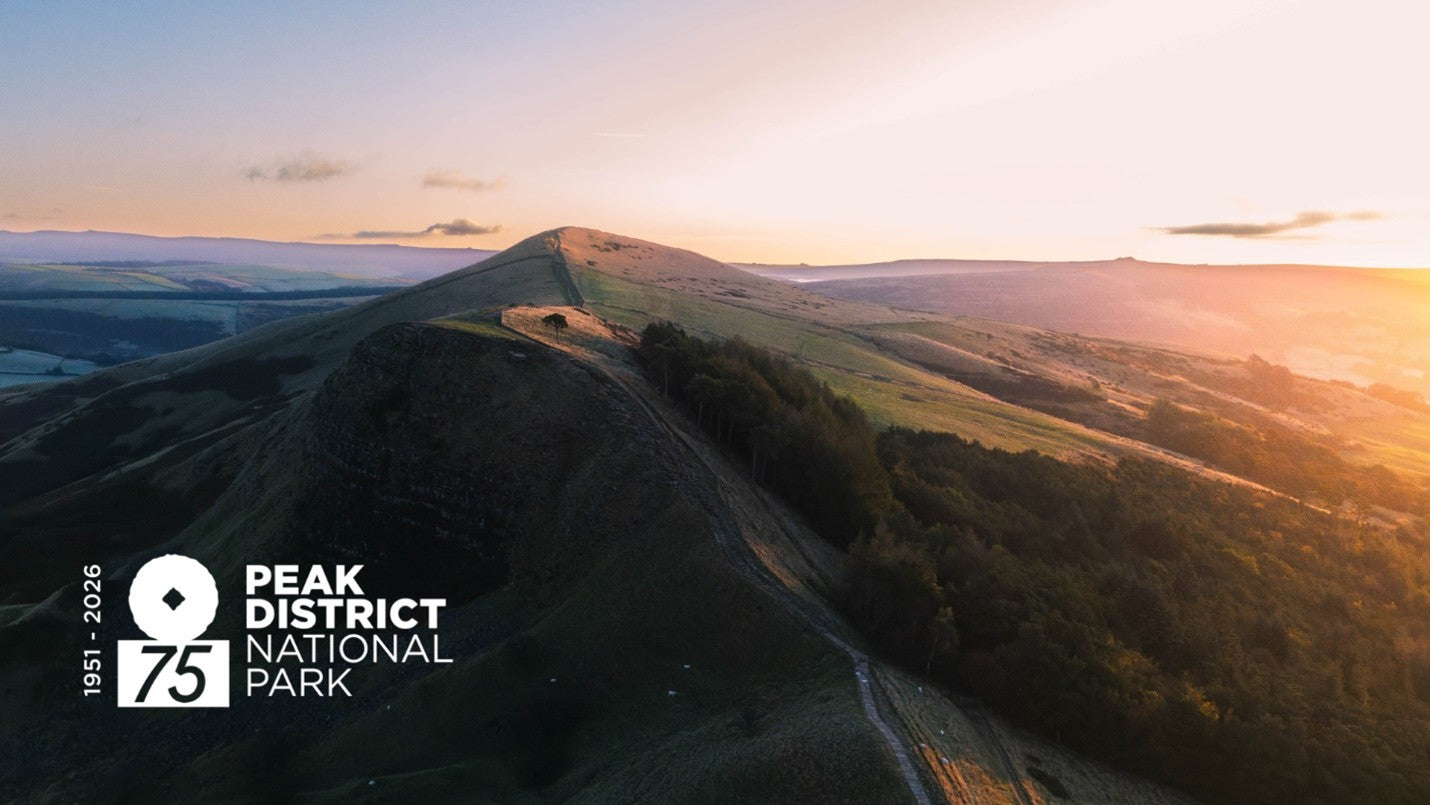
On 17th April 1951, the Peak District made history by becoming the UK’s first ever National Park. Now, in 2026, we celebrate an incredible 75 years of protecting one of Britain’s most treasured landscapes.
Located in the heart of England, the Peak District National Park stretches across Derbyshire, Cheshire, Staffordshire, Yorkshire and Greater Manchester, welcoming millions of visitors each year. Home to some of the country’s most iconic trails, villages and historic homes, the Peak District is one of the most diverse and distinctive outdoor destinations in the UK.
A Landscape Shaped By History and Culture
The Peak District is steeped in history. From prehistoric stone circles, like Arbor Low, to medieval ruins, such as Peveril Castle, the region is a living record of human life stretching back thousands of years. It’s also famous for its industrial heritage; the hills and valleys once powered lead mining, quarrying and textile production, shaping both the landscape and local communities.
Culturally, the Peak District played a key role in the fight for public access to the countryside. The Mass Trespass on Kinder Scout in 1932 became a turning point in the movement for walking rights, paving the way for the creation of National Parks and today’s right to roam. The park is also home to some of the most famous stately homes in the world, Chatsworth House, Hardwick Hall, Lyme and Haddon Hall, to name a few.
Environmental Importance
The Peak District is one of the UK’s most vital landscapes. Its peat bogs are natural carbon stores, helping fight climate change by trapping greenhouse gases. The park is home to many rare species, such as the ring ouzel, mountain hare, water vole and peregrine falcon. The region’s geology is also diverse: gritstone formed the dramatic edges and tors of the Dark Peak, such as Stanage Edge, whilst limestone created the White Peak’s caves, gorges and deep dales, including Dovedale and Castleton’s underground caverns. These landscapes have produced flowering meadows, ancient woodlands and crystal-clear rivers, creating a diverse environment that is rare elsewhere in England. Fun fact: some of the Peak District’s limestone caves were formed by ancient tropical seas over 300 million years ago, meaning parts of the park were once underwater!

How National Parks Protect the Peak District
Protecting a landscape as popular and important as the Peak District takes a lot of planning and passion. The Peak District National Park Authority aims to balance access with long-term protection, ensuring everyone can visit the Peaks for generations to come.
Moors for the Future
A key project is restoring damaged peatlands, where erosion and drainage can release stored carbon and harm water quality. By rewetting peat, blocking old gullies and replanting sphagnum moss, the park helps reduce downstream flooding risks whilst improving habitats for birds and insects.
Paths and Trails
Accessibility is another crucial part of conservation. Popular routes, like those around Kinder Scout, Mam Tor and the Great Ridge, are more prone to heavy erosion and require ranger repairs. Miles Without Stiles is an initiative to make the Peaks more accessible to all, including those with disabilities, so maintenance is carried out to ensure smooth routes and accessible gates where necessary.
Nature Recovery Plan
The Peak District National Park’s Nature Recovery Plan aims to reverse biodiversity loss, helping the wildlife of the Peaks to not just survive but thrive. The plan is to restore and improve key habitats, such as moorlands, grasslands, woodlands and rivers. It also aims to strengthen and reconnect these habitats across the park, creating better ecological networks so species can move and adapt, giving them more space to live.
Education
Education plays a huge role too: visitor centres, ranger-led walks and park events help inspire visitors and encourage responsible behaviour, such as keeping dogs under control during ground-nesting season, taking litter home and sticking to paths to reduce damage.
As outdoor lovers, we all play a role in protecting this special place by sticking to trails, respecting wildlife and caring for the kit that helps us explore it. At Grangers, we believe the best adventures start with looking after the outdoors and the gear that gets you there. Here’s to 75 years of the Peak District National Park, and many more to come.

Share:
Family-Friendly Hikes in the Peak District
Marathon Training Guide: Tips to Help You Run Further, Stronger, Smarter